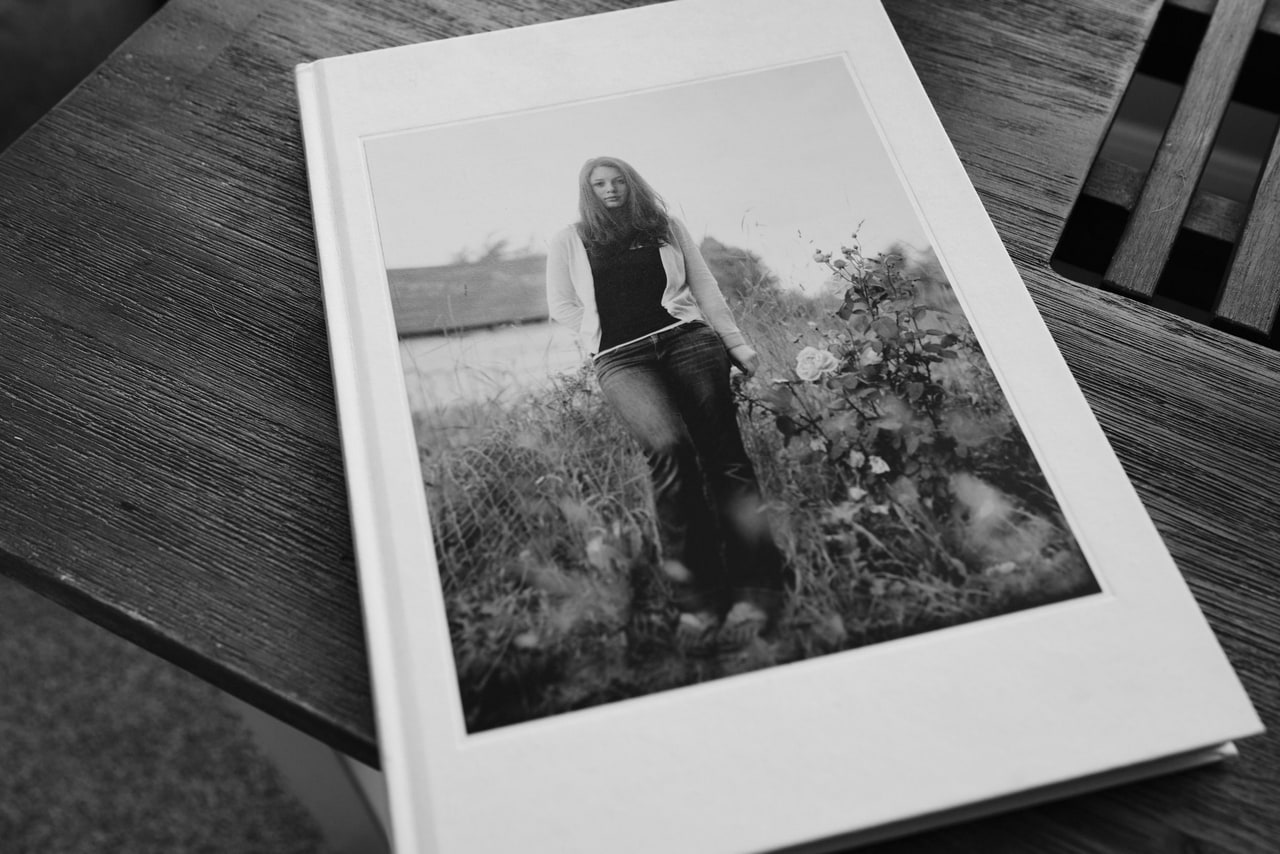
What I find poetic about Somersault is the way Raymond Meeks’ photographs of his daughter sit alongside those of trees and plants. I read the trees as both hopeful and melancholic. They naturally reach towards the light, but there’s a fragility to them too. I see something of that in the photographs of his daughter becoming a young woman, with all the change and uncertainty that brings.
In one photograph, a fallen railway crossing sign lies in overgrown grass. I like that detail. A sign like that usually tells you what to expect up ahead. Here, the grass has grown around it, and I find myself thinking about all the changes we never see coming.
One spread stays with me. On the left, branches cross the view of a house. On the right, a blurred figure in the foreground leaves us with just a glimpse of a young woman’s face. I take her to be Meeks’ daughter.
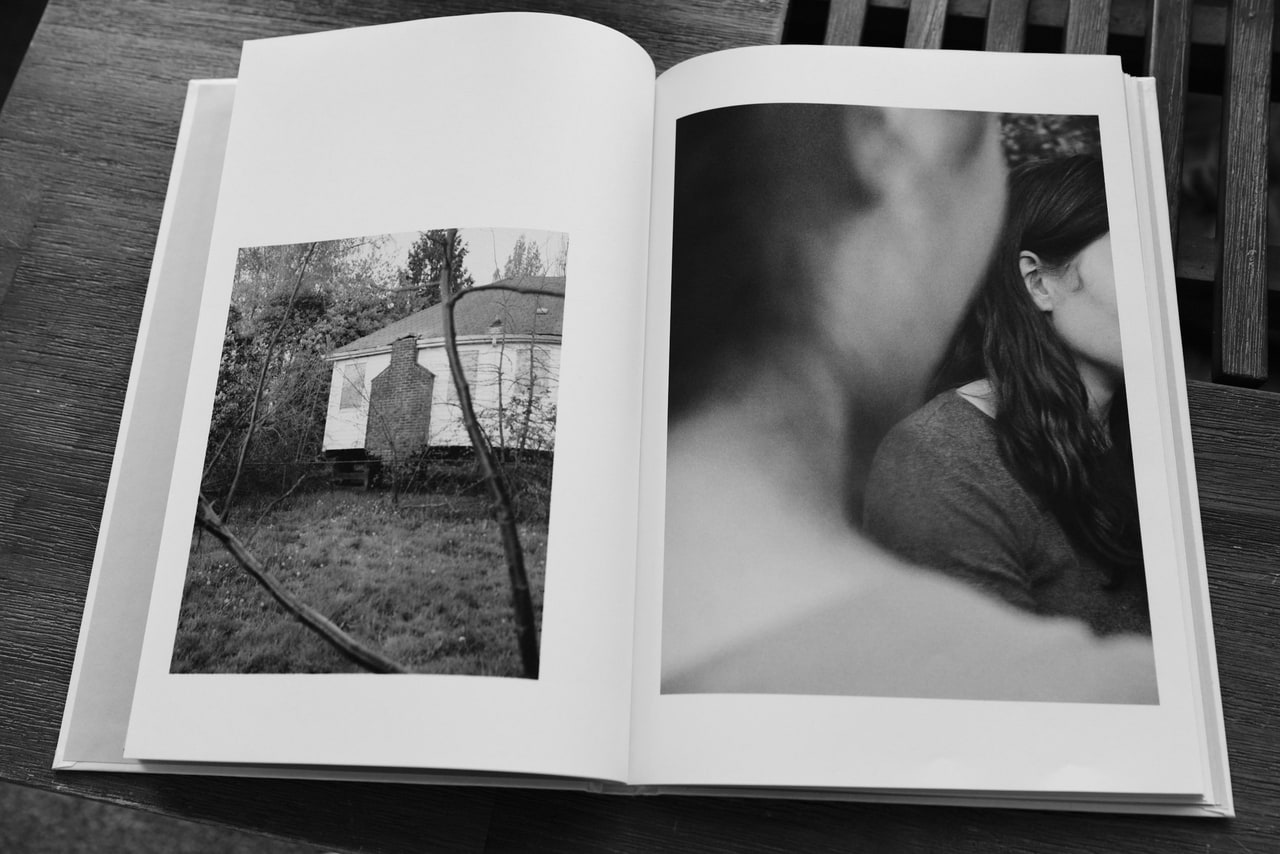
Home usually suggests somewhere safe and familiar. Seen through those branches, the house feels a little out of reach. Beside it, the portrait gives me the same feeling. It makes me think about how close you can feel to a child and how much of their life will always be a mystery to you. There’s a sense of loss in letting go, even if they were never yours to hold in that way.
Maybe that’s why I keep coming back to those trees reaching towards the light. You can watch them grow for years without knowing what shape they’ll take.
Raymond Meeks, Somersault. MACK, 2021. Hardcover with French-fold pages.