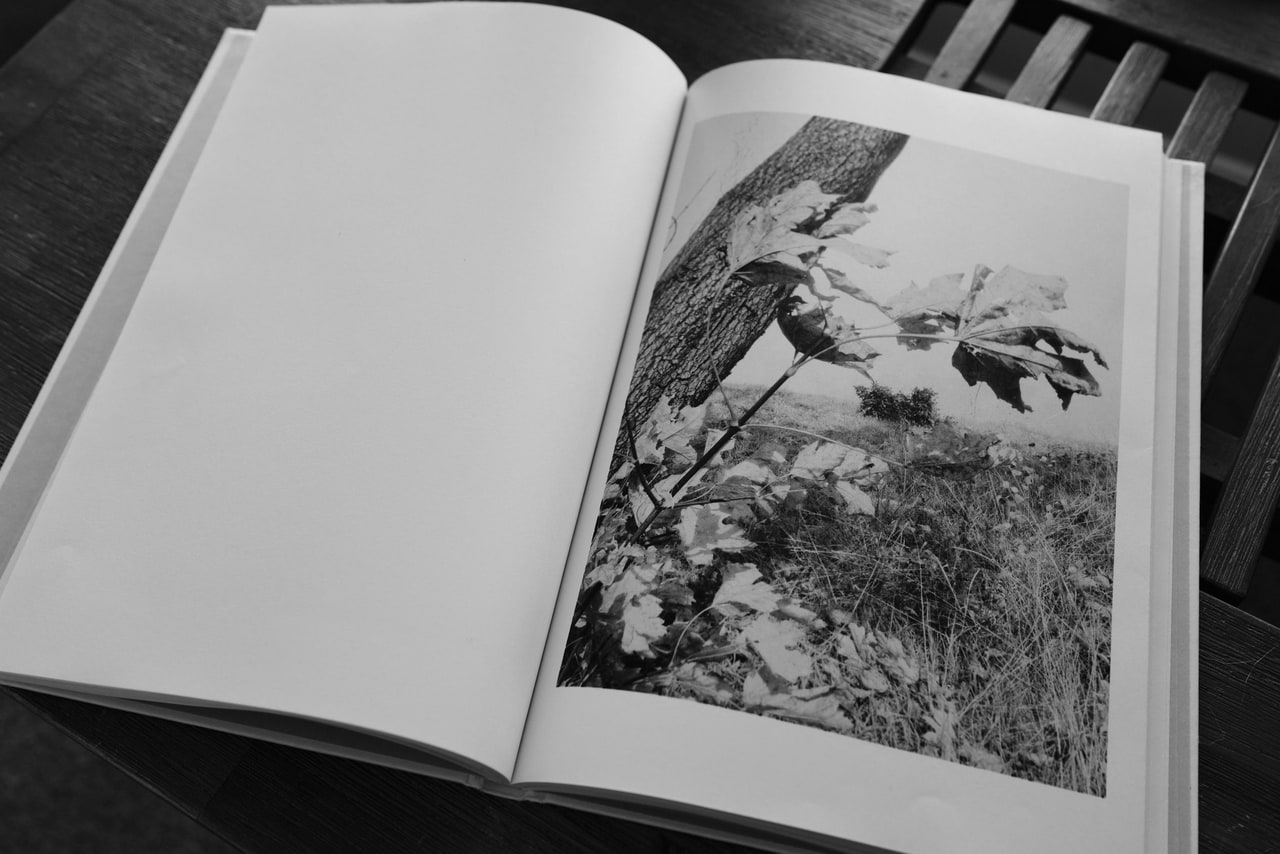
In my first post about Raymond Meeks’s Somersault, I wrote about a house seen through branches and a glimpse of a young woman’s face. This time I kept turning the pages. A plant with dry leaves stands in front of a tree branch that angles to the right. My eye follows the branch and I find myself thinking about what comes next.
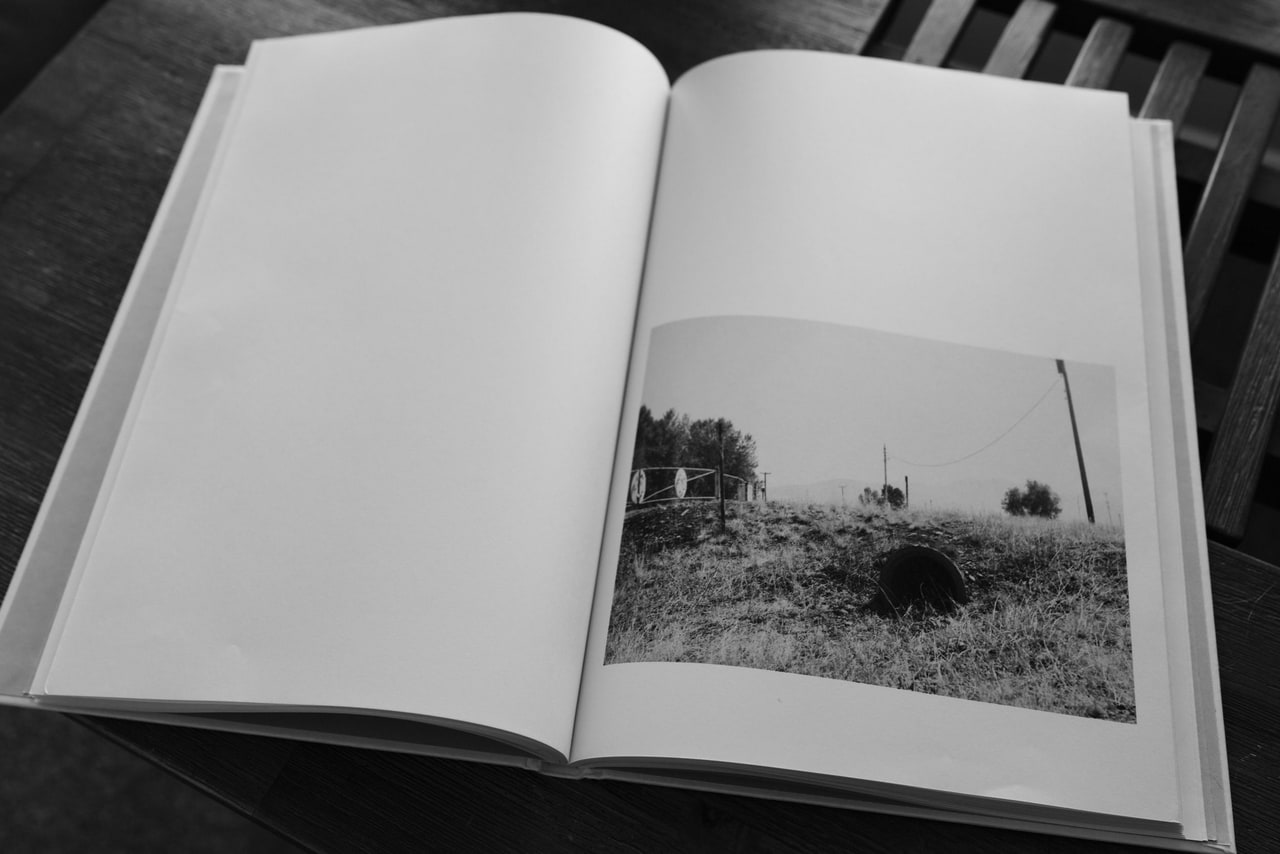
On the next spread, what looks like a roadside drainpipe sits low on the right page. There’s a lot of blank paper above it. My eye settles on the dark opening and I imagine water passing through.
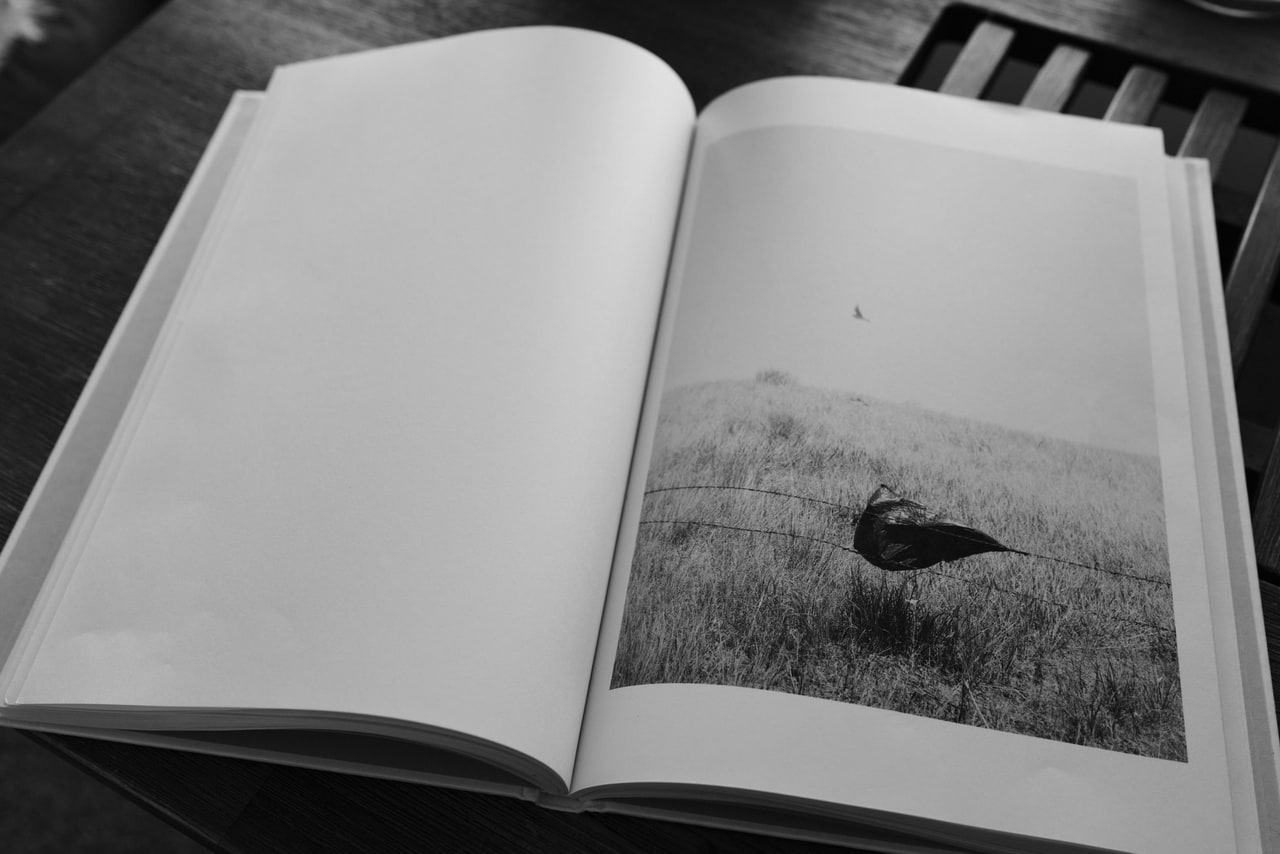
One more turn brings me to a piece of plastic, maybe a rubbish bag, snagged on a wire fence. A lone bird flies above it. Everything in the picture seems to want to move with the wind. The plastic tugs at the wire. The bird is already on its way.
In Episode 74 of the PhotoWork Podcast, Meeks talks about leaving room for the viewer’s imagination when editing The Inhabitants. I thought of that here. Each turn gives me a blank page on the left and a single photograph on the right. I slow down a little, and the movement in each picture has time to play out in my head.
I linger on the bird. There’s something lonely about that much sky around it, and something hopeful in how freely it moves. It brings me back to Meeks’s daughter. In the first post I had been thinking about watching her grow up. These pages make me think about what it feels like to watch her move on.
Spreads from Raymond Meeks’s Somersault (MACK, 2021). Photographs in the book by Raymond Meeks. Photographs of the book by Travis A. Simms.