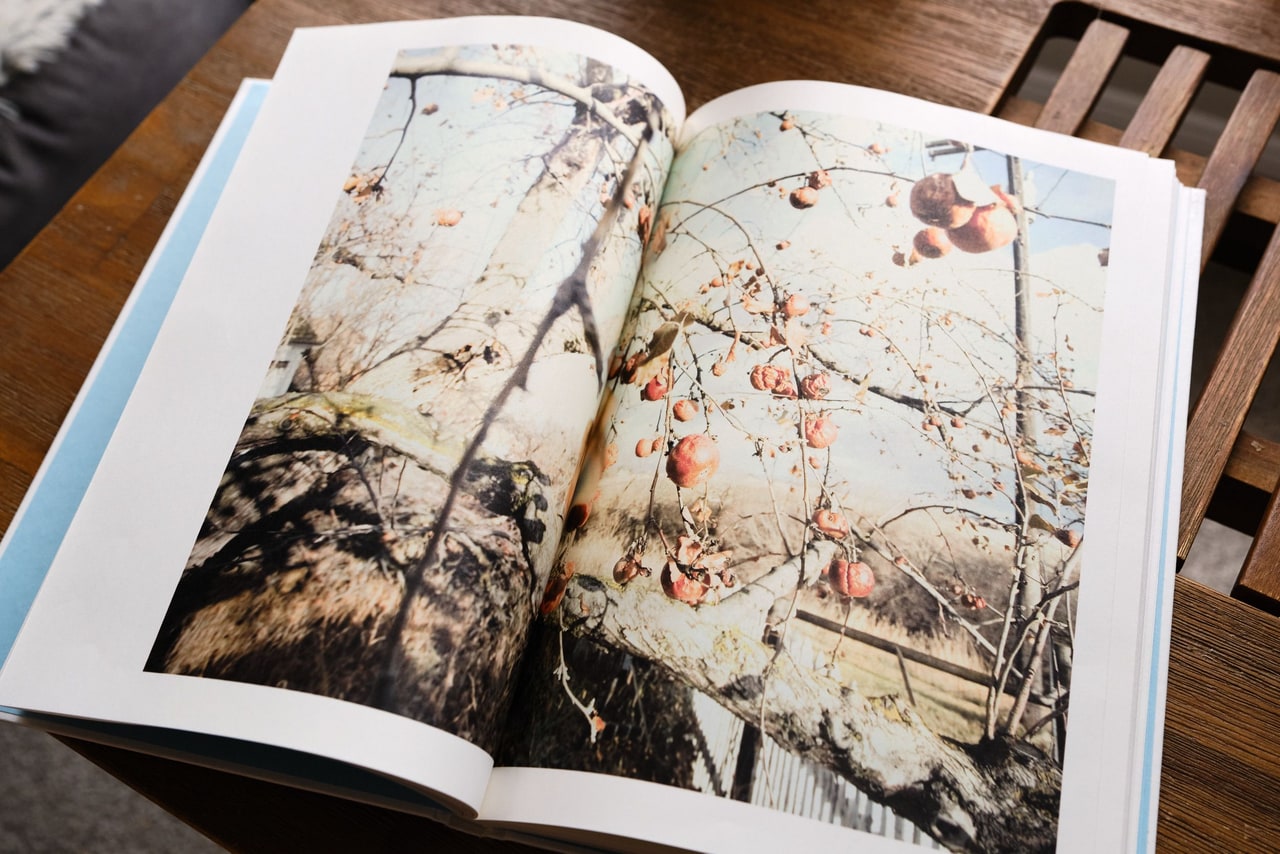
In Three pauses in Somersault, I wrote about how Raymond Meeks slows me down by giving a photograph a spread to itself. Turning through the book again, I stop at a colour photograph that stretches across both pages. It shows what looks like a fruit tree. The branches are spindly and almost bare, with some of the fruit withered and still hanging. There’s something wintry about it. The light is so bright it almost washes out the colour, and those thin branches look all the harsher for it.
I turn back a page. On the left are wildflowers, some of them looking as though they’ve been flattened. They have that same pale, almost overexposed look. On the right is a black-and-white photograph of Meeks’s daughter with someone I take to be a friend. The other person looks towards the camera. His daughter is looking off to one side.
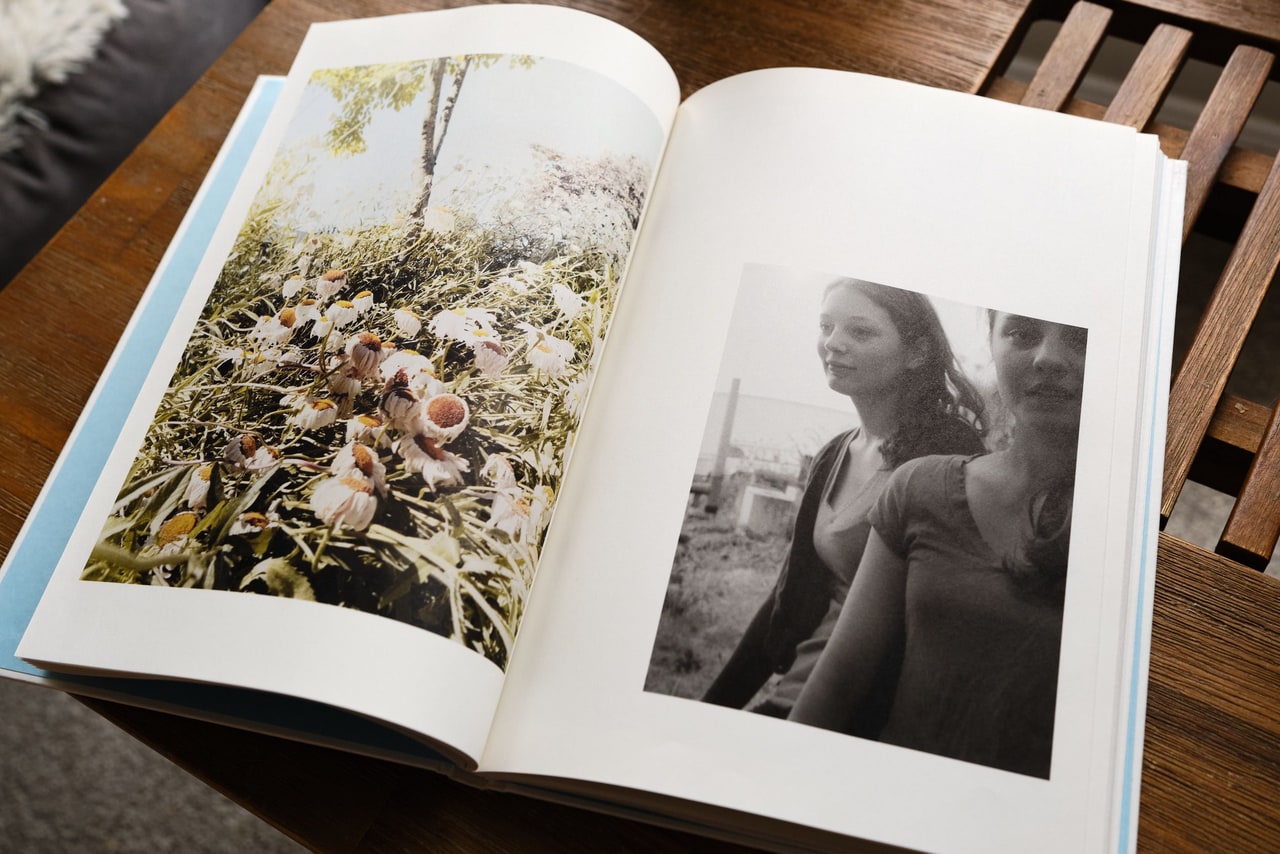
The portrait interrupts the colour and holds me there for a moment. I find myself wondering what has caught her attention. Then I turn the page and the pale colour returns, filling the spread. I’m left looking at the branches and the fruit.
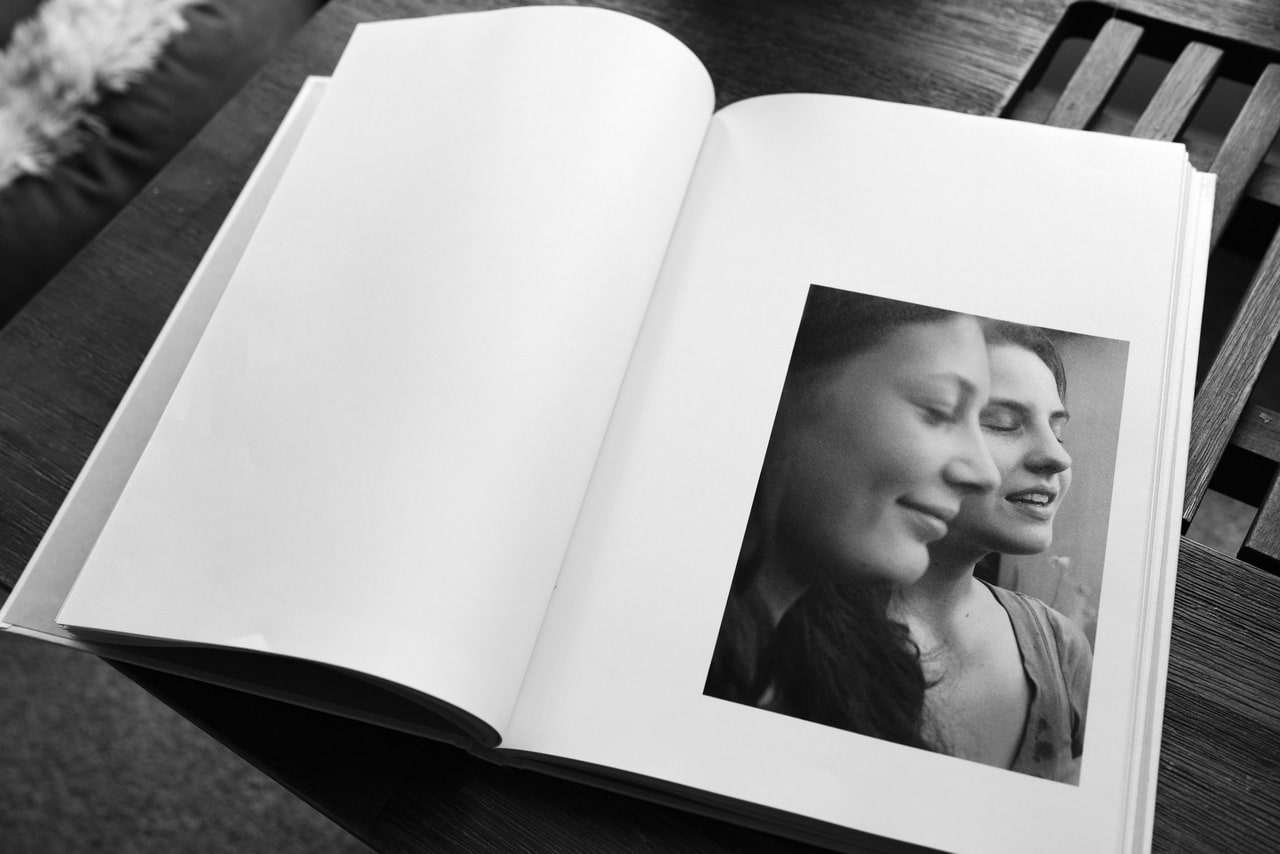
I turn the page again. The left page is blank. On the right are the two of them again, this time so close their faces almost fill the frame. Both have their eyes closed, their faces turned to the right and lifted slightly. After the stark light of the tree, the blank page feels like a held breath. Looking at their faces, I feel myself let it go. They look at peace, as though they have time to imagine what might come next.
I think of the wildflowers and the freedom that comes with growing up, as your life becomes more your own. And then I think of the tree and those few pieces of fruit still hanging. Somewhere in those page turns I feel the pull of both things. Her face is turned towards whatever comes next, and there’s a tenderness in the wish to hold on a little longer.
Spreads from Raymond Meeks’s Somersault (MACK, 2021). Photographs in the book by Raymond Meeks. Photographs of the book by Travis A. Simms.